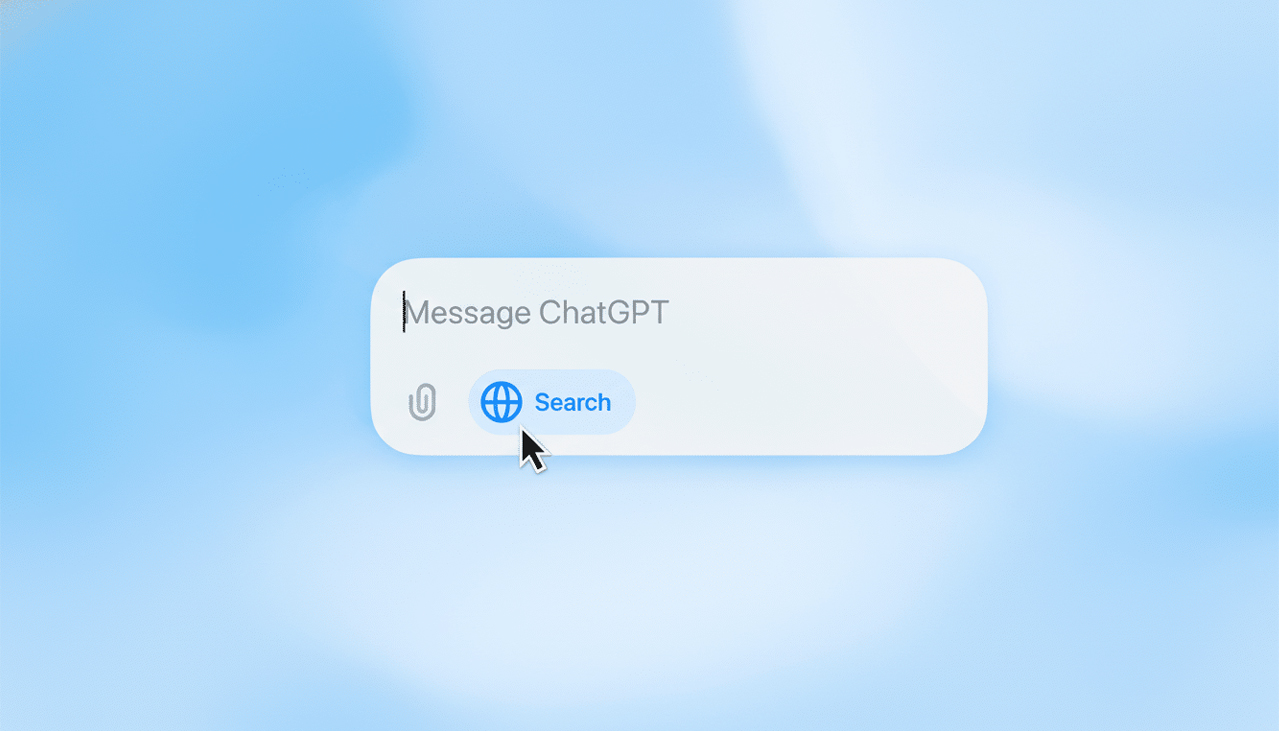
Search behavior is changing fast. Patients are no longer relying solely on Google to find a specialist, compare treatment options, or decide where to book care. Increasingly, they are asking ChatGPT questions like:
“Who is the best orthopedic surgeon near me for ACL surgery?”
“Which dermatology practice specializes in acne scar revision?”
“What’s the difference between PRP and stem cells for knee pain?”
When those questions get asked, the next question for every healthcare brand is simple: Will ChatGPT mention you—or someone else?
At Social Doctor, we call this shift the move from classic SEO to AI search visibility (often referred to as Generative Engine Optimization, or GEO). The goal is not “ranking” in the old sense of blue links. It’s earning inclusion in AI-generated answers, where patients are making decisions faster, with fewer clicks.
ChatGPT can surface information from its model knowledge and, in many contexts, use web search with citations to answer questions with current sources. That means your brand needs to be discoverable, credible, and easy for AI systems to understand.
Below is a direct, actionable framework to help healthcare practices improve visibility in ChatGPT answers.
1. Understand what “ranking on ChatGPT” means
Unlike traditional Google SEO, there is no public ‘ChatGPT ranking algorithm’ that you can manipulate. In reality, you are trying to increase the odds that ChatGPT will:
- select your site as a trusted source when it browses, and/or
- learn your brand signals across the web (brand mentions, authoritative references, clinical credibility), and/or
- use your pages to answer very specific patient questions clearly
OpenAI has publicly described that ChatGPT can search the web and return answers with links to sources. It also clarified that its search experience (originally introduced as SearchGPT) is distinct from model training and includes publisher controls over how they appear in SearchGPT.
Bottom line: you don’t “optimize for ChatGPT” by tricks. You optimize by becoming the best, clearest, most trusted source of information and services in your niche.
2. Win the prompts patients actually use
Traditional SEO focused on short keywords:
- “orthopedic surgeon NYC” or “acne dermatologist palo alto”
ChatGPT prompts are different. They are longer, more specific, and more comparison-driven, such as:
- “Who treats shoulder instability and labral tears and takes my insurance?”
- “Best minimally invasive spine surgeon for disc replacement near Dallas”
- “What’s the recovery timeline after arthroscopic rotator cuff repair?”
Data on ChatGPT-search behavior suggests many queries differ substantially from classic search patterns, with users asking longer and more detailed questions.
To appear in those answers, your website needs pages that directly address those question patterns with clarity.
3. Build “answer-first” service pages that AI can quote
ChatGPT tends to favor content that is structured, specific, and immediately useful. If your content forces the reader (or AI) to hunt, it gets skipped.
For every core service page, include:
- A plain-language definition of the condition or treatment
- Who is a candidate and who is not
- Symptoms and when it’s urgent
- Diagnosis and how you evaluate the patient
- Treatment options (including non-surgical vs surgical where appropriate)
- Benefits, limitations, and realistic outcomes
- Recovery timeline (in weeks/months, not vague phrases)
- Why your practice is different (fellowship training, outcomes, technology, patient experience)
- Strong call-to-action and location relevance
This is not filler. This is how your page becomes the easiest “source” for ChatGPT to pull into an answer.
4. Create content clusters around decision-making (this is where leads come from)
Most practices publish surface-level educational content and stop there. That is not what wins in AI search.
The highest-performing content for AI-driven patient journeys usually includes decision-support articles, such as:
- “Which treatment is right for me?” comparisons
- “What to expect” recovery guides
- Risks and outcomes explained in plain language
- Cost and insurance basics (without exact pricing promises)
- Procedure vs procedure comparisons
- “Questions to ask your surgeon” guides
This is the content patients ask ChatGPT for—because they want help deciding. If your site is the best source, you get cited and you get the click.
5. Get your structured data right (Schema matters more than most people think)
AI systems can read a page, but structured data makes it easier to interpret:
- Who you are
- What you offer
- Where you are located
- What each page is about
- What expertise you represent
At a minimum, healthcare organizations should implement schema for:
- Organization / LocalBusiness / MedicalBusiness
- Physician
- MedicalClinic
- Service
- FAQPage (when relevant)
- Review snippets (only when compliant and accurate)
This is not a “nice to have.” It reduces ambiguity and improves machine understanding across platforms.
6. Build authority signals beyond your website
If your entire reputation lives only on your own domain, you are fragile in AI search.
ChatGPT is more likely to cite sources that appear trusted across the web—especially for medical topics where credibility matters.
You need third-party corroboration:
- High-quality backlinks (medical publications, hospitals, universities, respected local outlets)
- Consistent directory listings (Healthgrades, WebMD, Vitals, Zocdoc, etc.)
- Local SEO assets (Google Business Profile content, location consistency)
- Press mentions, “Top doctor” lists, interviews, podcasts
- Academic output when applicable (publications, conference participation)
OpenAI has emphasized working with publishers and surfacing web results with sources, reinforcing that trusted publishing ecosystems matter.
This is why Social Doctor pushes clients to build a real footprint, not just “a prettier website.”
7. Be exceptionally strong at local search fundamentals
Most patient searches are local. Even if the prompt doesn’t mention a city, location relevance affects outcomes.
If your NAP (name, address, phone), categories, service areas, and provider information are inconsistent, you lose.
To be “ChatGPT-visible,” you must also be “local-search clean,” because AI tools frequently rely on web indexes and business entity data.
That includes:
- Correct provider and practice name formatting
- Accurate specialty labels
- Clear service areas and city pages
- Proper internal linking between doctor pages and services
- Updated hours, phone, maps, and appointment routing
8. Improve “AI readability”: clarity beats clever writing
Healthcare content fails when it becomes too promotional, too vague, or too academic.
To perform well in ChatGPT-style answers, your content should be:
- Direct and specific
- Written at a patient comprehension level
- Structured with short sections and clear subheads
- Consistent terminology (don’t rotate between 5 names for the same procedure)
- Free from overclaiming and marketing fluff
AI rewards content that answers the question quickly without ambiguity.
9. Keep your pages current (stale content gets ignored)
When ChatGPT uses web search, it favors up-to-date sources for anything that changes: procedures, devices, guidelines, recovery protocols, insurance considerations.
That means your site needs:
- Regular page updates
- Modern “last reviewed” timestamps (when accurate)
- Clean page maintenance (no broken links, outdated claims, old physician bios)
If you are publishing content and never refreshing it, you are slowly disappearing.
10. Measure what matters: AI referrals and lead quality
This is where most teams are behind.
You should be tracking:
- Traffic from ChatGPT / OpenAI referrals in GA4
- Landing pages that AI sends users to
- Conversion rates from AI traffic vs organic search
- What prompts are producing leads (via intake scripts and call tracking)
- Which pages are being cited most often
AI traffic may not be huge yet for every practice—but it is often high intent, because the user is already in decision mode.
Semrush has noted ChatGPT can drive notable traffic patterns to certain web resources and behaves differently than typical search engines.
Social Doctor’s approach: “Search everywhere” marketing for healthcare
Ranking on ChatGPT is not a gimmick. It is the natural next step in high-performance healthcare marketing.
It requires the same foundation that builds Google growth—high-quality content, authority, local optimization, and strong technical performance—but with a sharper emphasis on:
- Answer-ready writing
- Entity clarity (doctor + specialty + location + services)
- Trust signals across the internet
- Conversion-focused patient journeys
Healthcare practices that win this shift will not just “rank.” They will become the default recommendation in the tools patients use every day.
If you want Social Doctor to build a marketing system that improves visibility on Google, in AI search, and across every major discovery channel, we can help you do it with clear strategy, execution, and measurable results.